
Head and neck cancers constitute a heterogeneous group of malignancies arising from the mucosal surfaces and structures of the upper aerodigestive tract. These include cancers of the oral cavity, pharynx, larynx, nasal cavity, paranasal sinuses, salivary glands, and select skin sites of the head and neck region. Given their proximity to critical organs responsible for speech, swallowing, breathing, and appearance, these cancers demand highly specialized, meticulously coordinated care that balances oncologic control with functional preservation.
SPECTRUM AND DISEASE BIOLOGY
Head and neck cancers are biologically diverse, with outcomes influenced by anatomical site, histology, molecular profile, and etiologic factors such as viral association. Squamous cell carcinoma represents the most common histologic subtype, though salivary gland tumors and rare malignancies require distinct management strategies.
Common disease sites include:
- Oral cavity (tongue, gums, floor of mouth)
- Oropharynx (tonsils, base of tongue)
- Hypopharynx and larynx (voice box)
- Nasal cavity and paranasal sinuses
- Major and minor salivary glands
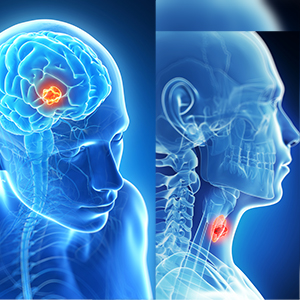
Human papillomavirus (HPV)–associated oropharyngeal cancers, in particular, exhibit unique biology and improved treatment responsiveness, reinforcing the importance of accurate molecular classification.
RISK FACTORS AND PREVENTIVE MEASURES
The development of head and neck cancers is closely linked to environmental exposures and lifestyle practices, though viral and genetic factors also play a role.
Key risk factors include:
- Tobacco use in smoked or smokeless forms
- Excessive alcohol consumption
- HPV infection, especially in oropharyngeal cancers
- Occupational exposures and poor oral hygiene
- Prolonged sun exposure (for lip and skin cancers)
Preventive strategies emphasize tobacco and alcohol cessation, HPV vaccination, regular dental and medical evaluations, and early assessment of persistent symptoms such as non-healing ulcers, voice changes, or swallowing difficulty.
EARLY DETECTION AND ADVANCED DIAGNOSTICS
Early-stage head and neck cancers are often curable, making prompt diagnosis critical. Comprehensive evaluation integrates clinical expertise with advanced imaging and pathology.
Diagnostic modalities include:
- Detailed head and neck examination and endoscopy
- Contrast-enhanced CT, MRI, and PET-CT imaging
- Image-guided and endoscopic biopsies
- Histopathological and molecular tumor profiling
Accurate staging and biological characterization guide treatment selection and prognostic assessment with precision.
PERSONALIZED TREATMENT STRATEGIES
Management of head and neck cancers is highly individualized, taking into account tumor location, stage, molecular features, and patient-specific functional considerations. Treatment plans aim to achieve durable disease control while minimizing impact on speech, swallowing, and appearance.
Therapeutic approaches may include:
- Surgery: Organ-preserving and minimally invasive techniques when feasible
- Radiation therapy: Highly conformal modalities such as IMRT to spare normal tissues
- Systemic therapy: Chemotherapy, targeted agents, and immunotherapy
Multimodal treatment is frequently employed for locally advanced disease to maximize cure rates while preserving quality of life.
MULTIDISCIPLINARY EXPERTISE AND COORDINATED CARE
Head and neck oncology demands seamless collaboration across specialties. Surgeons, medical oncologists, radiation oncologists, radiologists, pathologists, speech and swallowing therapists, nutritionists, and rehabilitation experts work in concert to deliver comprehensive care. Under the clinical guidance of experienced specialists such as Dr. Priyadarshini, patients benefit from evidence-based protocols, individualized decision-making, and transparent communication at every stage of treatment.
SUPPORTIVE CARE AND FUNCTIONAL REHABILITATION
Given the functional impact of head and neck cancers, supportive care is integral to treatment success. Early and proactive rehabilitation preserves function and enhances recovery.
Supportive services include:
- Speech and swallowing therapy
- Nutritional assessment and feeding support
- Pain and symptom management
- Dental evaluation and oral care
- Psychological counselling and social support
This holistic framework ensures that patients are supported physically, emotionally, and socially throughout their care journey.
SURVIVORSHIP AND LONG-TERM FOLLOW-UP
Survivorship care focuses on vigilant surveillance for recurrence, management of late treatment effects, and restoration of functional independence. Long-term follow-up addresses speech and swallowing outcomes, nutritional health, thyroid function, and psychosocial well-being. Education and lifestyle guidance empower survivors to regain confidence and reintegrate into daily life.
COMMITMENT TO INNOVATION AND ETHICAL EXCELLENCE
Excellence in head and neck cancer services is anchored in continuous clinical innovation, adoption of emerging technologies, and adherence to international standards of care. Advances in precision radiation, minimally invasive surgery, and immuno-oncology continue to refine outcomes. Ethical practice, patient dignity, and shared decision-making remain central to every therapeutic endeavour.
CONCLUSION
Head and neck cancers present intricate clinical challenges that extend beyond tumor control alone. Through early detection, personalized multimodal therapy, and robust supportive care, modern head and neck oncology strives to deliver cure while preserving function and quality of life. With multidisciplinary collaboration and patient-centered values, contemporary care offers clarity, confidence, and hope at every stage of the journey.