
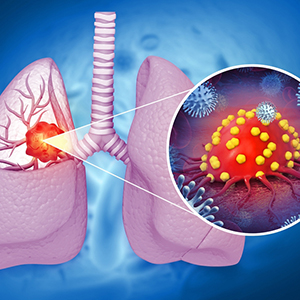
Lung cancer is a highly complex and biologically diverse malignancy originating from the tissues of the lungs, most commonly the bronchial epithelium. It remains one of the leading causes of cancer-related mortality worldwide, largely due to late-stage diagnosis. Broadly classified into non–small cell lung cancer (NSCLC) and small cell lung cancer (SCLC), each subtype demonstrates distinct growth patterns, molecular drivers, and therapeutic responses. Modern oncology has significantly reshaped lung cancer management through early detection strategies and the evolution of targeted and immune-based therapies.
RISK FACTORS AND DISEASE PREVENTION
The development of lung cancer is influenced by a combination of environmental exposures, genetic susceptibility, and lifestyle factors. While smoking remains the predominant risk factor, a significant proportion of cases occur in non-smokers, underscoring the multifactorial nature of the disease.
Major risk factors include:
- Tobacco smoking and passive smoke exposure
- Occupational exposure to carcinogens such as asbestos and silica
- Prolonged air pollution exposure
- Family history of lung malignancies
- Pre-existing chronic lung diseases
Preventive care emphasizes smoking cessation, workplace safety, air-quality awareness, and regular medical evaluations for high-risk individuals. These measures play a crucial role in reducing incidence and enabling earlier detection.
SCREENING AND EARLY DIAGNOSIS
Early diagnosis markedly improves survival outcomes in lung cancer. Advances in imaging and diagnostic technology have enhanced the detection of early-stage disease, often before symptoms manifest.
Diagnostic and screening approaches include:
- Low-dose computed tomography (LDCT) for high-risk populations
- High-resolution CT and PET-CT for staging and assessment
- Bronchoscopy and endobronchial ultrasound-guided biopsies
- Molecular and genetic profiling of tumor tissue
Pathological and genomic evaluation identifies actionable mutations, allowing clinicians to tailor therapy with exceptional precision.
INDIVIDUALIZED TREATMENT APPROACHES
Lung cancer treatment has entered an era of personalization, driven by tumor genetics and patient-specific factors. Therapeutic decisions are formulated after meticulous staging and molecular analysis.
Key treatment modalities may involve:
- Surgical intervention: Curative resection for early-stage disease
- Radiation therapy: Advanced techniques such as stereotactic body radiotherapy (SBRT)
- Systemic therapies: Chemotherapy, targeted therapy, and immunotherapy
The integration of precision medicine has reduced unnecessary toxicity while significantly improving disease control and patient outcomes.
MULTIDISCIPLINARY EXPERTISE AND CLINICAL EXCELLENCE
Optimal lung cancer care is achieved through a coordinated, multidisciplinary model. Pulmonologists, thoracic surgeons, medical oncologists, radiation oncologists, radiologists, pathologists, and supportive care specialists collaborate to deliver seamless, evidence-based treatment. Under the clinical guidance of experienced specialists such as Dr. Priyadarshini, patients benefit from internationally aligned protocols, advanced therapeutics, and compassionate communication that supports informed decision-making.
SUPPORTIVE CARE AND LONG-TERM MANAGEMENT
Lung cancer care extends well beyond tumor control. Comprehensive supportive services are integral to maintaining physical strength, emotional stability, and overall quality of life throughout and after treatment.
Supportive care services include:
- Symptom management for breathlessness, pain, and fatigue
- Pulmonary rehabilitation and nutritional counseling
- Psychological support and stress management
- Palliative care focused on comfort and dignity when required
These services ensure that care remains patient-centered at every stage of the disease journey.
SURVIVORSHIP AND QUALITY OF LIFE
For patients achieving remission or long-term disease control, survivorship care focuses on monitoring, rehabilitation, and prevention of recurrence. Structured follow-up protocols address late treatment effects, secondary malignancy risks, and functional recovery. Lifestyle optimization and emotional support empower survivors to reclaim independence and confidence.
COMMITMENT TO INNOVATION AND ETHICAL CARE
Excellence in lung cancer services is defined by continuous clinical innovation, participation in research, and the adoption of emerging therapeutic advances. From molecular diagnostics to next-generation immunotherapies, a commitment to scientific rigor and ethical practice ensures that patients receive care aligned with the highest global standards.
CONCLUSION
Although lung cancer remains a formidable diagnosis, modern medicine offers unprecedented opportunities for early detection, precise treatment, and holistic care. Through personalized therapy, multidisciplinary collaboration, and unwavering patient support, contemporary lung cancer services strive not only to extend life but also to enhance its quality with dignity, clarity, and hope.